Two new initiatives launched on gender equality and peacebuilding in Thailand’s Southern Border Provinces
Date:
Authors: Montira Narkvichien and Naruedee Janthasing
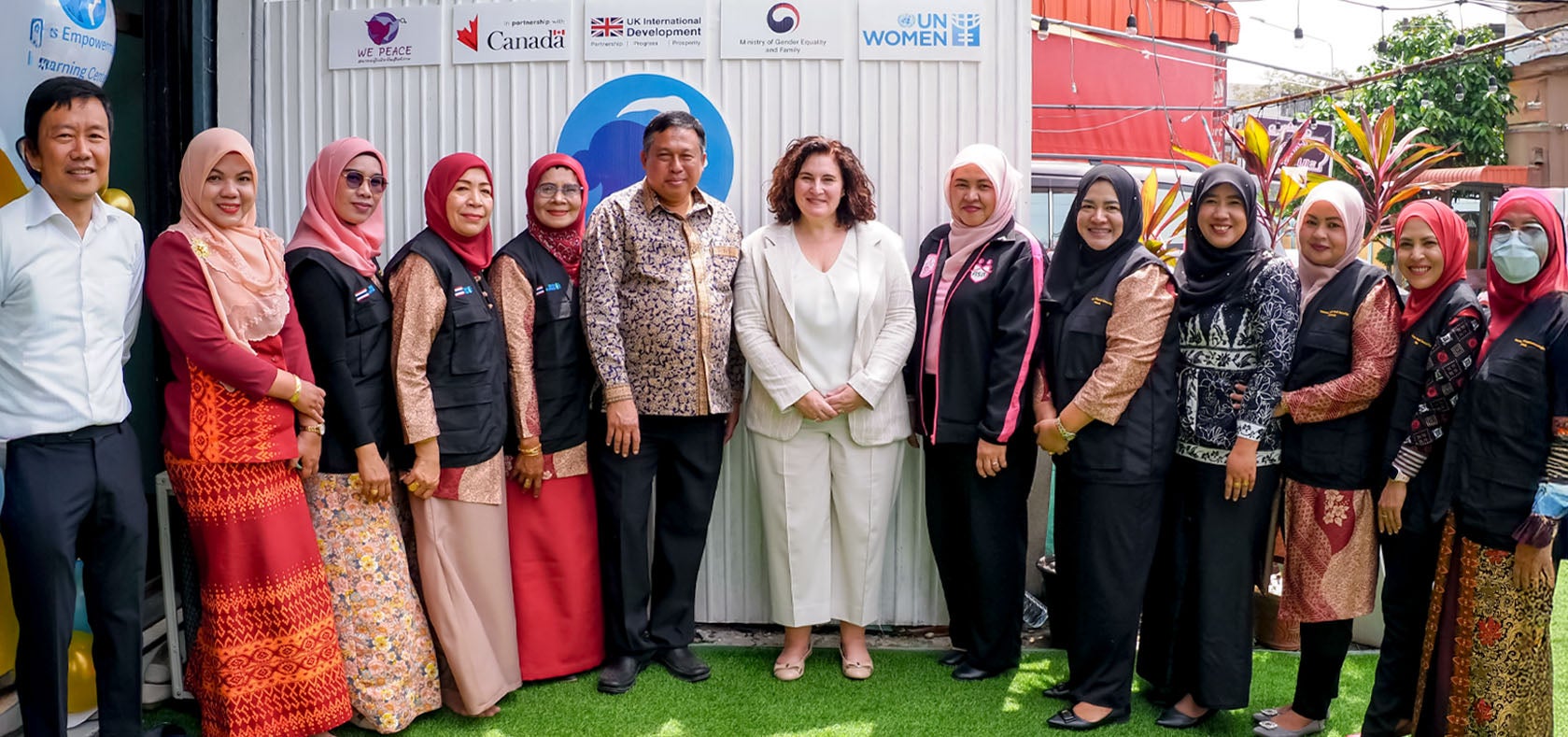
Bangkok and Narathiwat, Thailand — Two new community-based initiatives were launched during a recent mission to Thailand’s Southern Border Provinces (SBPs) by UN Women’s Regional Director for Asia and the Pacific and Representative in Thailand, Christine Arab, alongside Suda Sulong, Deputy Director-General of the Department of Women’s Affairs and Family Development for the Ministry of Social Development and Human Security (MSDHS). The visit, from 13–14 February 2025, aimed to strengthen partnerships, enhance gender equality and advance the Women, Peace and Security (WPS) agenda by launching the Women’s Empowerment and Learning Centres (WE Centres) and the WPS Network.
“WE Centres serve as safe spaces for members of the WPS Network to learn, collaborate and advance the WPS agenda while amplifying women’s meaningful role in social cohesion at the local level,” said Arab.
“The WE Centres are about empowering women, not just by providing opportunities, but by creating a space for exchange and learning, which serves as the foundation for sustainable peace and security,” added Sulong.
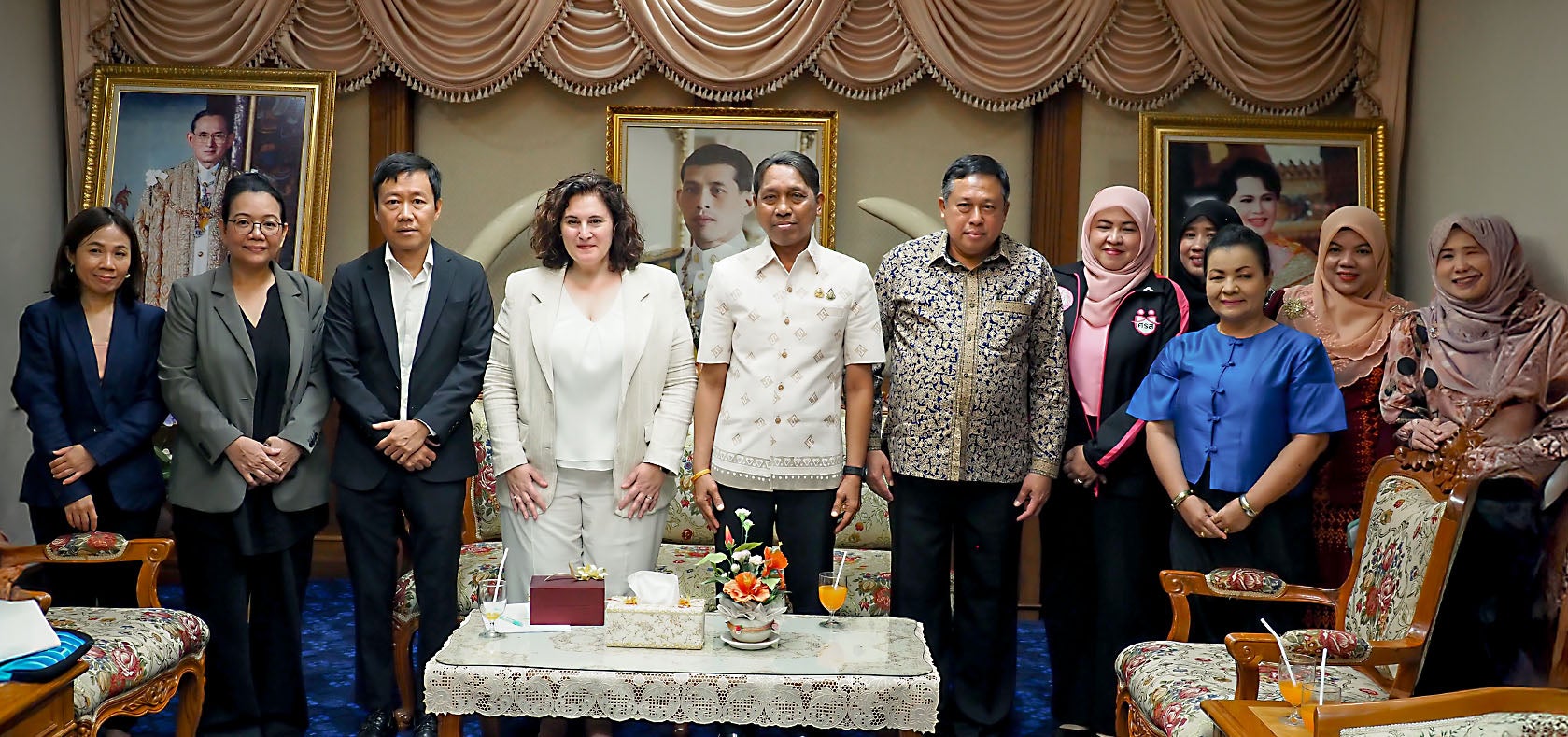
The delegation engaged in high-level discussions with local government leaders, reinforcing the importance of women’s leadership in governance and peacebuilding.
Governor Ampon Phongsuwan, of Yala, thanked UN Women for prioritizing women’s empowerment in the three SBPs, acknowledging their distinct vulnerabilities and vital contributions, and emphasized the importance of advancing gender equality in a manner that respects local culture and traditions.
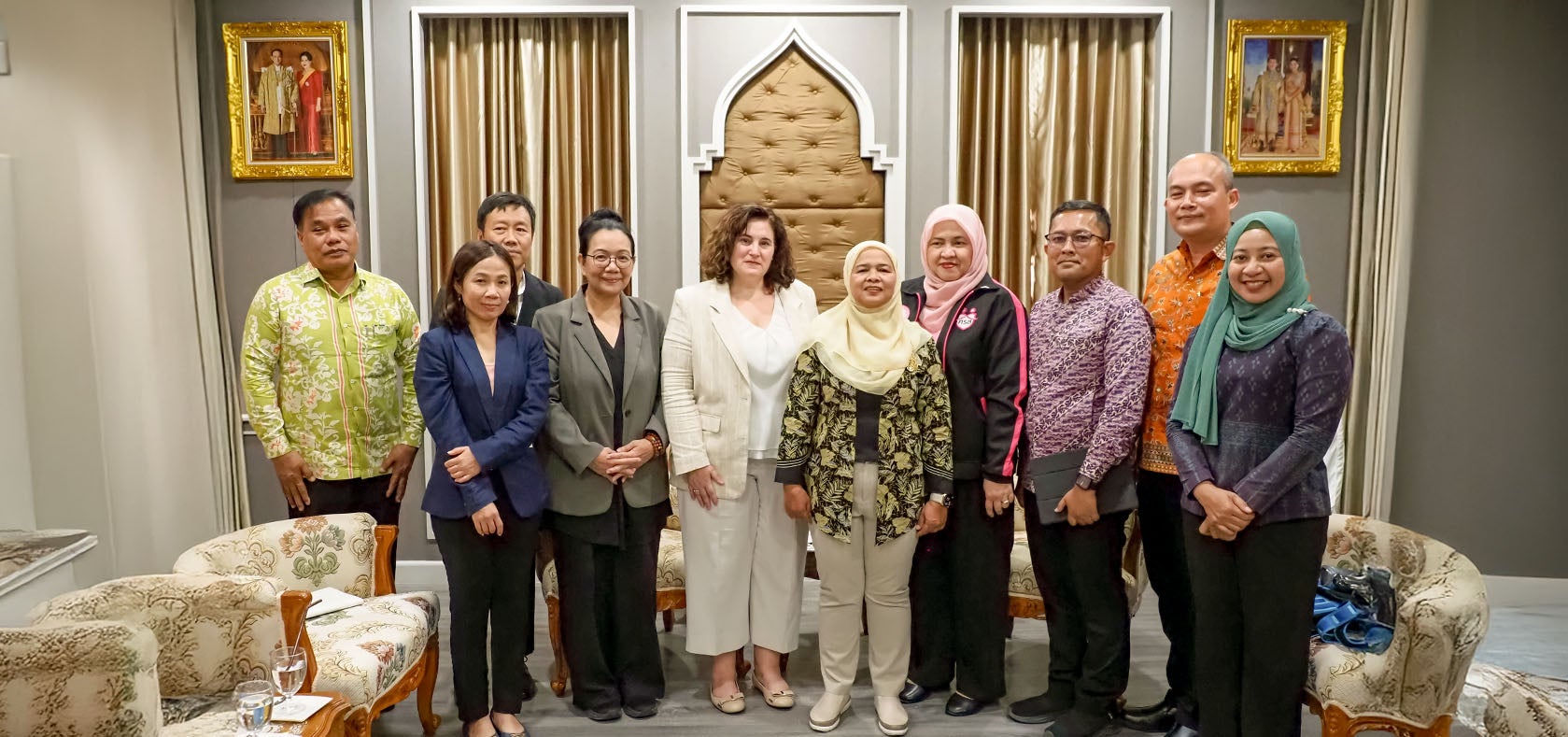
In Pattani, Governor Patimoh Sadiyamu – Thailand’s first woman Muslim governor – welcomed the delegation and reaffirmed her commitment to advancing gender equality in the province. Discussions focused on institutionalizing the newly established WE Centre and WPS Network, ensuring their sustainability and integration into Thailand’s National Action Plan (NAP) on WPS, which is under development.
“The Pattani Provincial Office has made it a priority to support, promote and strengthen women’s leadership, meaningful participation and economic empowerment in Pattani. Women in our province have been the driving force behind community-level economic development and conflict prevention,” said Sadiyamu.
A safe space for learning and economic empowerment
On 13 February 2025, the second WE Centre was inaugurated in Yala. This milestone builds on the first centre, established in 2024 at the Coordination Centre for Children and Women (CCCW). The new centre, managed by the Women’s Peace Association (WE Peace) in collaboration with women leaders from all eight districts of Yala, is unique is its integration of a social enterprise model: a coffee corner offering locally brewed beverages and a marketplace for women to sell handmade and community-produced goods. This not only supports economic empowerment but fosters sustainable funding for centre activities.
“The WE Centre is more than just a café; it’s a space for connection, empowerment and peacebuilding,” said Pateemoh Pohitaedaoh, of WE Peace.
In Pattani, there are two WE Centres. The first, located in the Yuyo community, is spearheaded by a group of widows and single mothers who have turned to mushroom farming as a means of economic resilience.
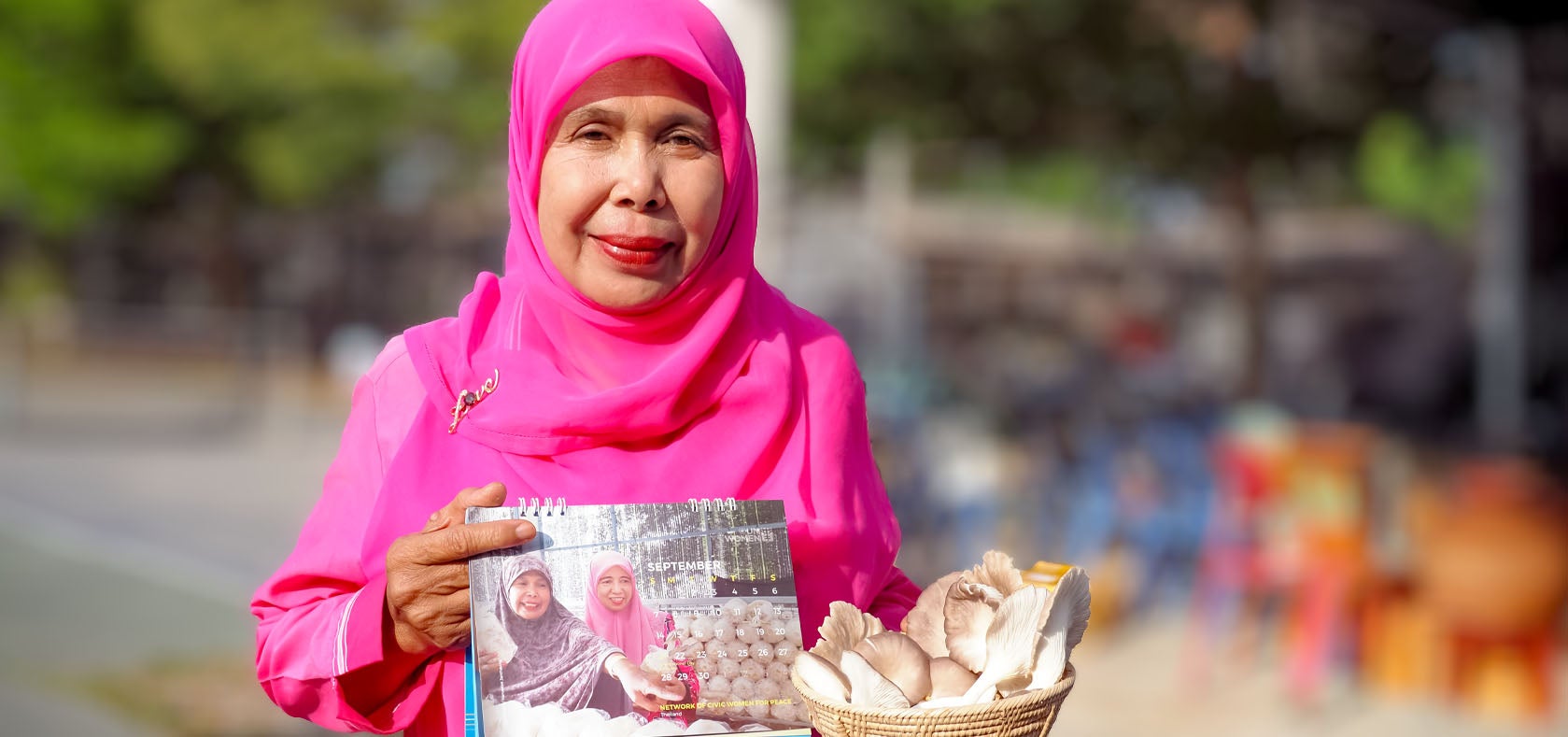
“This mushroom farm is the heart of the community for single mothers – a place where opportunities grow, incomes flourish and families thrive,” said Phanyawadee Awae, a beneficiary of the project.
The second WE Centre housed within Prince of Songkla University’s Faculty of Science and Technology, is a collaborative effort among civil society organizations (CSOs), including the network of Civic Women for Peace, Fasai Association, and the Buddhists for Peace Network. Together, these centres provide women, youth and community members with opportunities for knowledge-exchange, leadership training, digital security and peacebuilding activities.
“This WE Centre will strengthen women’s capacity in Pattani, building essential employment and transitional skills that lead to improved quality of life and dignity. Through this vital space, we’re creating pathways for women to shape not only their own futures but the future of their communities,” says Maruf Chebueraheng, of the digital4peace Foundation, which has been at the forefront of training women in the SBPs to navigate digital spaces safely.
Looking ahead
With strong backing from local government leaders and the active involvement of CSOs, the establishment of the WE Centres and the WPS Network in Thailand’s SBPs are set to create lasting impacts. They offer a blueprint for fostering inclusive governance, strengthening women’s leadership, and ensuring that gender equality remains at the heart of peace and security efforts in the region.
As Thailand prepares to implement its NAP on WPS, the commitment of local women, government officials and CSOs will be instrumental in shaping a more inclusive and peaceful future.
“The WE Centres are founded on the strength of empowered women’s groups and CSO networks, serving as safe spaces for the Networks to learn, collaborate, and advance the Women, Peace and Security agenda while amplifying women’s meaningful role in social cohesion at the local level. These centres also foster economic opportunities for women, ensuring their sustainability and long-term impact within communities,” said Arab. The new WE Centres are among six UN Women-supported centres now operating in Chiang Rai, Pattani and Yala provinces. These centres have been funded and strengthened through contributions from the Governments of Australia, Canada, the United Kingdom and the Republic of Korea.
See also